
5,000 devotees. One Tepito sidewalk. The black aspect of Holy Death the media gets wrong.
2026-10-05
The Rise of Public Santa Muerte Devotion in Tepito: Black Robes, Protection, and Desamparo
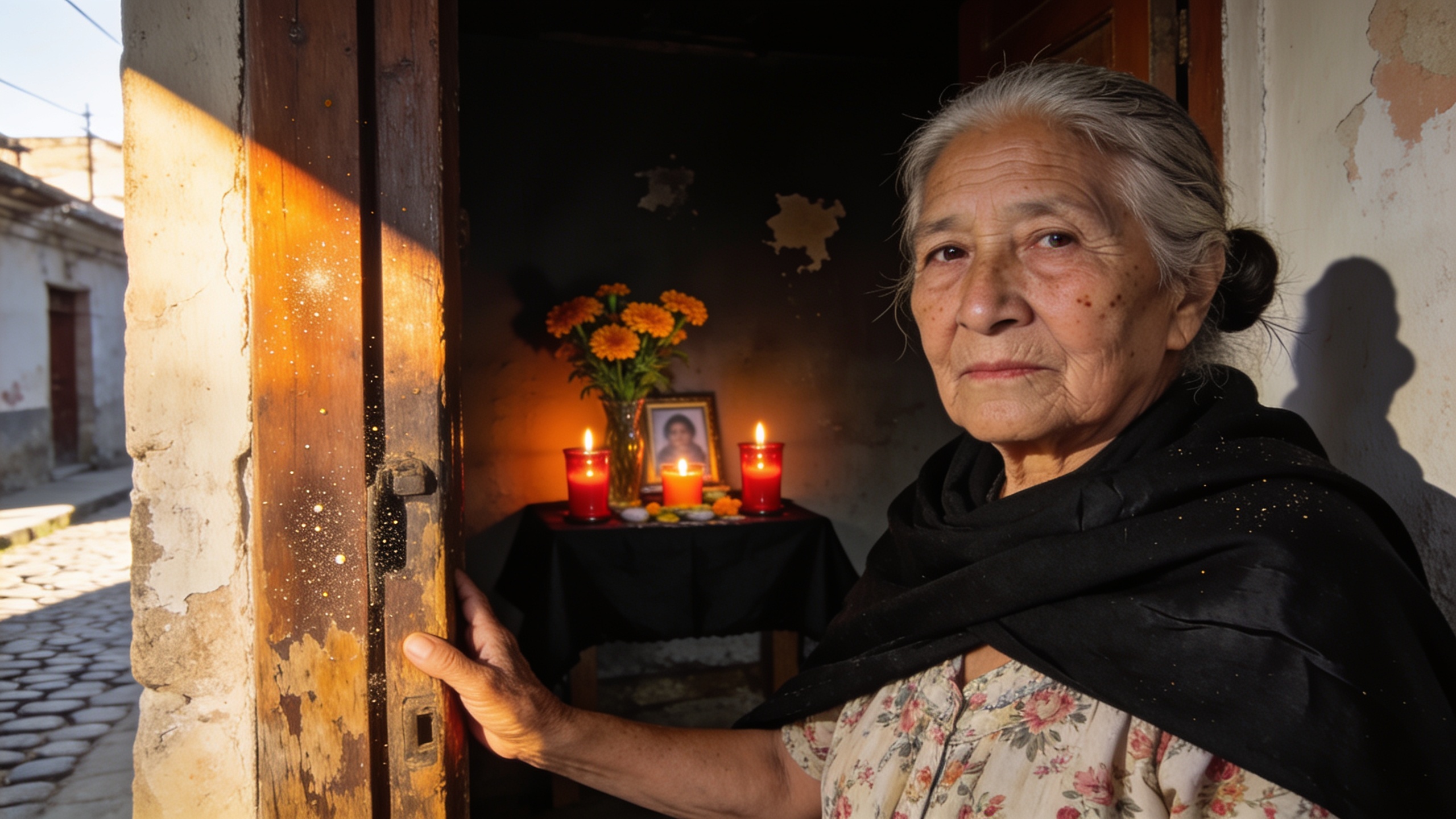
On the first of each month, they come. Five thousand people surge toward a glass-encased skeleton standing outside a house in Tepito, the Mexico City barrio where residents say everything is for sale except dignity. Some carry white candles. Some carry black ones. The Santa Muerte Tepito black aspect is the devotion you see on that street, and it didn't begin with cartels or with Hollywood's idea of a death cult. It began in September 2001, when a great-grandmother named Enriqueta Romero opened her altar to the public, and it grew because the people who came had nowhere else to go.
What This Is: Public Santa Muerte Devotion in Tepito and the Black Aspect
Santa Muerte, Holy Death, is a folk saint whose veneration merges Catholic symbolism with pre-Hispanic worship of Mictlantecuhtli and Mictlancihuatl, the Lord and Lady of the Dead. In Tepito, a neighborhood famous since Aztec times for its black market and its boxing champions, her public devotion took root in the early 2000s. It became one of Mexico's fastest-growing faiths. The black aspect is one face. She wears many robes. Devotees who identify with her duality between dark and light, good and evil, often appeal to both at once. Most understand that good and evil coexist in her. The black robe belongs to protection. It's a defense of the defenseless. People reach for it when the institutions meant to protect them don't. If you're new to the figure herself, start with who Santa Muerte is.
What This Is Not: A Narco Death Cult, Satanism, or a Single Official Church
The U.S. military has called Santa Muerte a "death cult." The Roman Catholic clergy denounces her. Reporters arrive in Tepito looking for skulls and cartel bosses. What they find is a great-grandmother in a faded housedress placing a necklace around a visitor's neck. Santa Muerte isn't Satanism. You won't find a single official church with a hierarchy and a pope, either. She is a folk saint whose following, as the scholar David Bromley argued in 2016, has a core among dispossessed populations but draws from a broader swath of Mexican society. Bromley wrote in 2016 that the movement is on the threshold of designation as dangerous religion, but that status is contingent, not settled. The devotion doesn't belong to criminals. It belongs to anyone who needs it, and most of the people who need it aren't narco lords. They are vendors. Prisoners. Grandmothers. The abandoned.
Tepito as the Public Stage: From Hidden Devotion to Street-Level Shrines
Tepito has been a place of informal and illegal commerce for generations. Laura Roush's 2014 study in the Latin American Research Review calls it a neighborhood historically specialized in exactly that trade. What changed in the 2000s was visibility. Devotion existed quietly. It lived in homes. From the mid-1990s it became highly visible not only in Mexico but also in the United States. Its rise coincided with the expansion of organized crime, and that coincidence created the impression that the icon belonged to a coherent narco-culture. But coincidence isn't causation. The people of Tepito didn't adopt Santa Muerte because cartels told them to. She was there, on the street. She doesn't reprimand.
Enriqueta Romero told the writer D.E. Campbell, visiting for Foreign Policy in 2010, why Mexico's Catholic churches stand empty while thousands of Holy Death shrines spread across the country. "The church reprimands," Romero said. "She accepts everyone, with faults and without." That acceptance moved devotion from the private table to the public shrine.
The Black Aspect: Black Robes, Protection, and the Moral Language of Desamparo
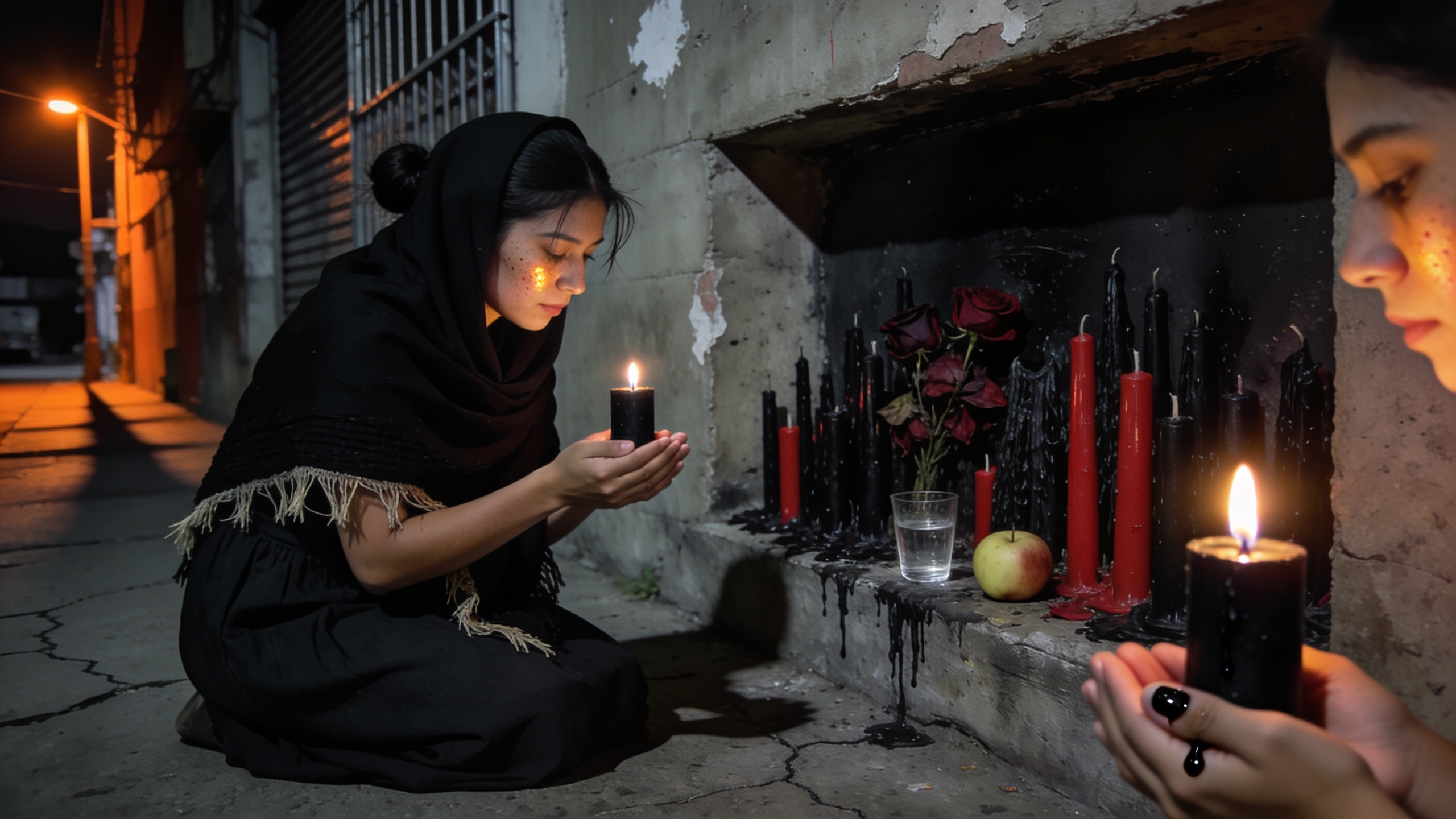
The black aspect is where the devotion's moral ambiguity becomes visible. Desirée Martín's 2017 article in the journal Religions takes its title from a devotee's prayer: "Santísima Muerte, vístete de negro, Santísima Muerte, vístete de blanco." Dress in black. Dress in white. The prayer moves between the two, because the devotee moves between the two. Most of Santa Muerte's devotees understand that good and evil coexist in her, and they appeal to both sides when they need to.
The black robe belongs to protection. When you light a black candle before Santa Muerte, you're asking for shielding, for defense, for a wall between yourself and what's coming for you. The word that Roush uses for the condition these devotees share is desamparo. It means being without protection. It means being abandoned, destitute, without even a dog to bark at you, as the Mexican saying goes. The National Geographic story from May 2010 quotes a prisoner named Antonio explaining why he and his friend El Niño trust Santa Muerte. She is there, he says, after all the friends you thought you had have forgotten your very name.
El Niño entered prison nine and a half years before the article, at age 20, for murder. He was abandoned by his father at seven. He believes Santa Muerte kept guards from finding forbidden objects that could have added decades to his sentence. "The guards didn't see a thing," he said, "even though they were right there." That's the black aspect in practice. You aren't casting a curse. You're asking for protection from someone who has none. You can learn more about the full spectrum of her robes at colors and aspects.
Enriqueta Romero's Altar and the Monthly Prayer Service
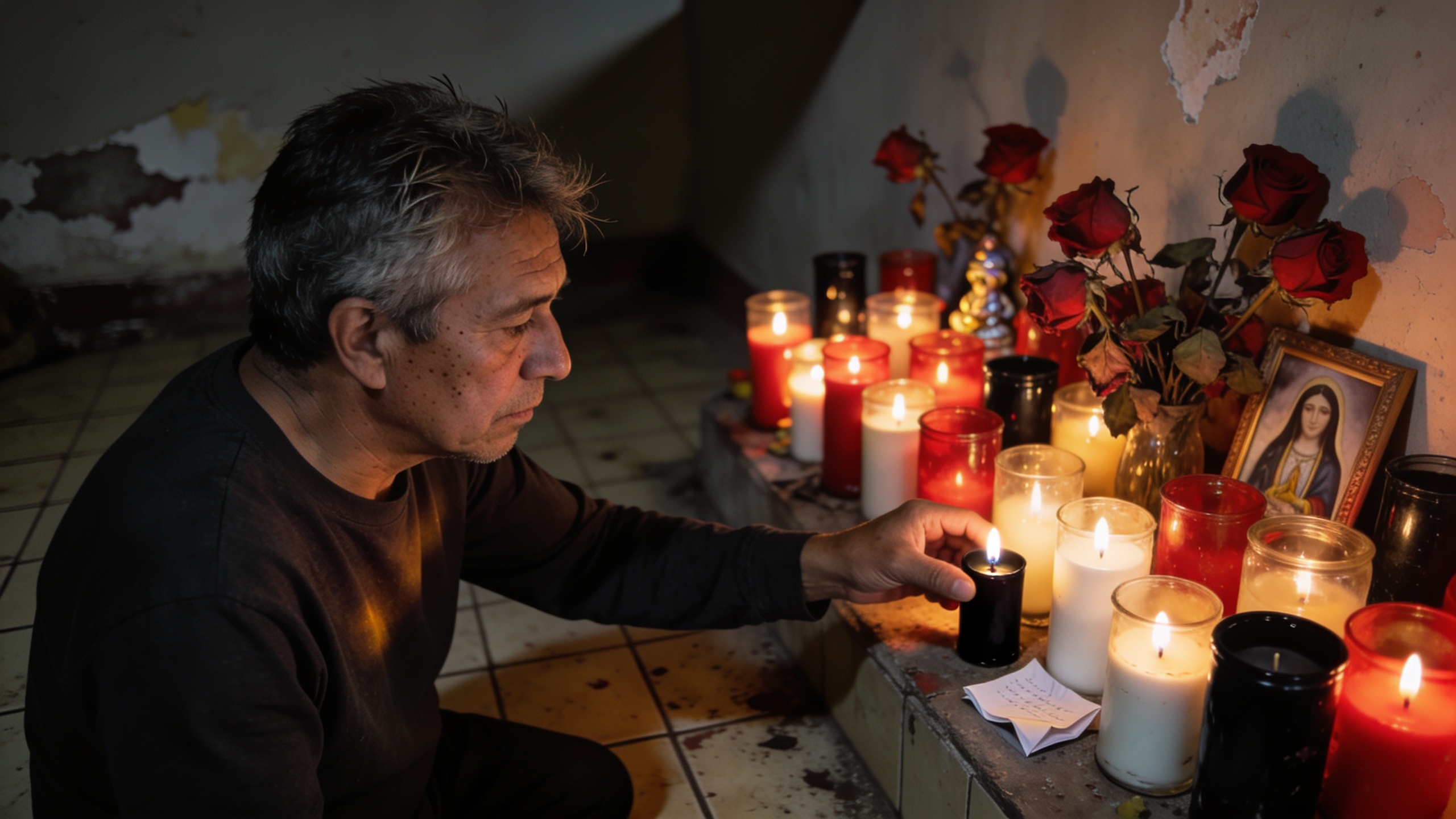
The monthly prayer service at Romero's altar dates to September 2001. That single date matters. It means that before the wave of cartel violence that engulfed Mexico after 2006, before the U.S. military noticed Santa Muerte, before the media arrived with cameras looking for narco-saints, a great-grandmother in Tepito had already opened her door. The shrine holds a glass-encased skeleton. On the first of each month, worshippers crowd toward it. When Campbell visited in November, Romero placed a necklace with a skull pendant around the visitor's neck while 5,000 people surged toward the case outside her house.
Roush's study describes how the monthly service now balances two pressures. It serves the needs of the congregation. It responds to accusations against devotees in the mass media. The altar is a place of worship and a place of public defense. The same gestures that share Santa Muerte iconography encompass laments and high-minded indignation over blanket attribution of violent intentions to a population. They also encompass a language for making threats. That's the moral ambiguity. The black aspect doesn't resolve it. The devotion holds both.
Media Accusations, Marginalization, and the Defense of Devotees
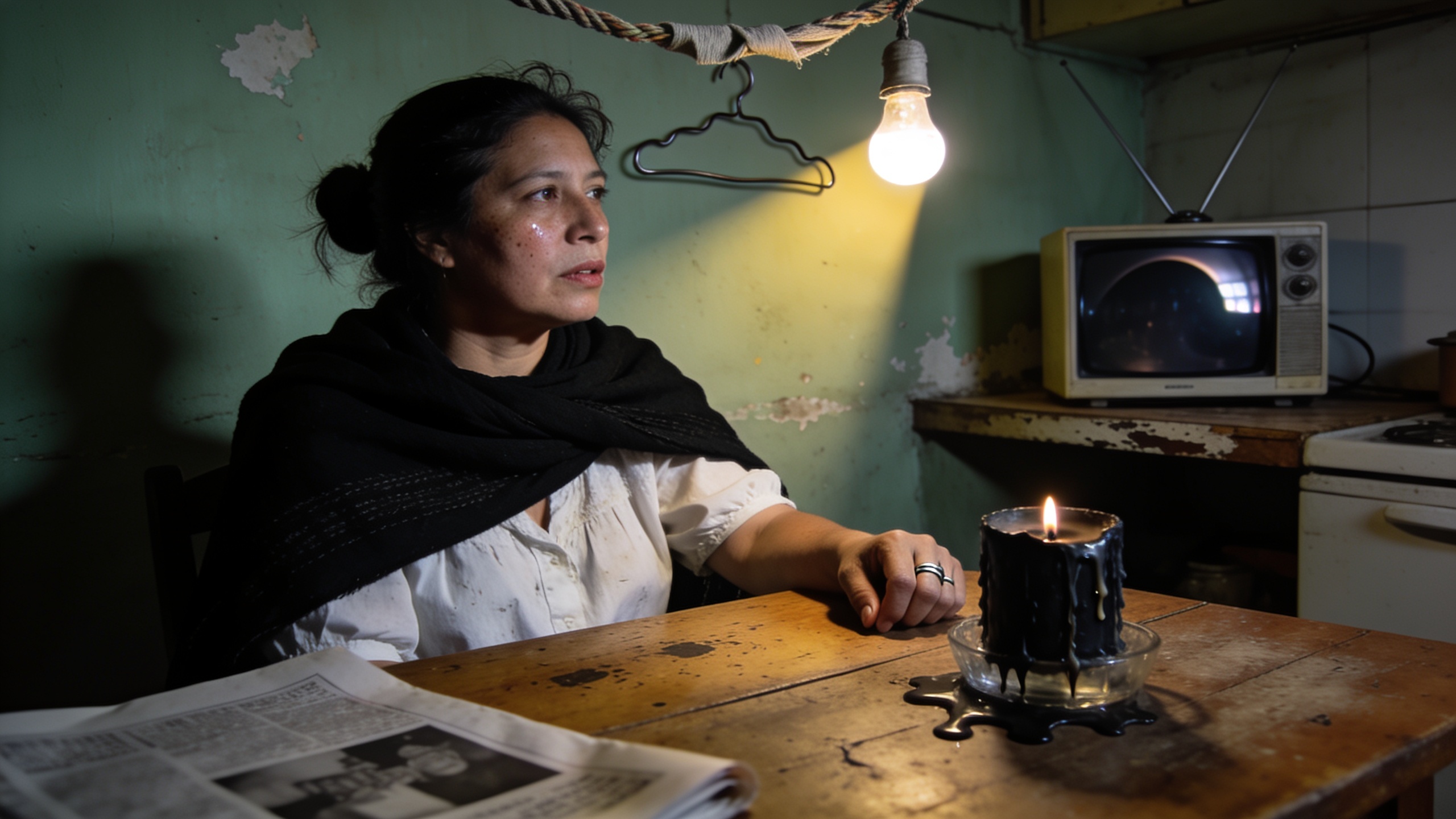
The mass media has been relentless. Santa Muerte devotees are portrayed as criminals, as people whose prayers are contracts with death. Roush's article makes a point that cuts through this relentless media framing, arguing that the average devotee is always affected by the likelihood that new acts of violence will be styled as religious. When someone commits a crime and leaves a Santa Muerte candle at the scene, the devotion absorbs the blame. When a cartel boss builds a shrine, the devotion absorbs that too.
But the devotion at Romero's altar isn't a cartel's shrine. It's a monthly prayer service run by a great-grandmother in a housedress. Martín's scholarship frames Santa Muerte as the patron of the marginalized and dispossessed, in Mexico, the United States, and beyond. Illegality and marginalization are associated with her because illegality and marginalization are the conditions her devotees live in. The association is sociological. It isn't theological. People who have been abandoned by every other institution turn to the one figure who accepts them.
Kingsbury and Chesnut's 2021 study traces how Santa Muerte's devotional framework grew through religious bricolage, integrating elements of Afro-Cuban Santeria and Palo Mayombe, New Age beliefs, and even Wicca. The result isn't a single doctrine. It's a set of practices that devotees assemble according to need. The black aspect means one thing at one altar and something slightly different at another. What stays constant is the petition: protect me, because I am desamparado, and no one else will. For more on how to approach a petition, see petitions.
Limits: One Altar, Many Meanings, and Contested Color Symbolism
Color symbolism in Santa Muerte isn't fixed. The black robe means protection at one altar and something else at another. Kingsbury and Chesnut describe a framework built through bricolage, not through a catechism. Martín emphasizes that devotees move between dark and light, appealing to both at once. You can't look at a black candle on a stranger's altar and know what was asked.
Roush's study focuses on a single altar in Tepito. That's its strength and its limit. One altar shows one congregation's practice. It doesn't speak for every devotee. The devotion is growing, as Bromley argued in 2016, toward the threshold of designation as dangerous religion, and whether it crosses that threshold depends on forces outside any single altar.
If you're reading this for health, legal, or safety guidance, stop. A black candle won't treat an illness. You need a doctor for that, and a lawyer for a locked door. Fire safety matters: you must keep candles on stable surfaces away from cloth and paper, and never leave a burning candle unattended in your home. Consent matters in every ritual act. For guidance on ethical practice, see ethics and safety.
Questions People Actually Ask About Santa Muerte in Tepito and the Black Aspect
### What does the black aspect of Santa Muerte mean? The black robe and black candle belong to protection. Devotees light a black candle before Santa Muerte to ask for shielding, defense, and a wall between themselves and danger. As Martín's 2017 research shows, devotees identify with Santa Muerte's duality between dark and light, and most understand that good and evil coexist in her.
### Is Santa Muerte in Tepito a narco-cult? No. The devotion became highly visible from the mid-1990s, and its rise coincided with the expansion of organized crime, which created the impression of a narco-culture. But the core following, as Bromley's 2016 analysis argues, is among dispossessed populations. The monthly prayer service at Enriqueta Romero's altar dates to September 2001, before the worst of Mexico's cartel violence. Romero told Campbell that Santa Muerte "accepts everyone, with faults and without."
### Why did public Santa Muerte devotion start in Tepito? Tepito has been a center of informal and illegal commerce since Aztec times. Roush describes it as a neighborhood historically specialized in that trade. The devotion moved from private homes to public shrines because people in Mexico City desperately needed a figure who would accept them without reprimand. Romero said Mexico's Catholic churches stand empty because "the church reprimands," while Santa Muerte never does.
### What do you bring to a black-aspect Santa Muerte altar? A black candle, fresh water, and a petition. Water is the first offering you should place at any Santa Muerte altar, regardless of the specific color aspect you're working with that night. The black candle carries the petition for protection. Light it, state your need plainly, and let it burn. For more on keeping an altar, see altar care.
If you're carrying a black candle to Santa Muerte tonight, you're in good company. Five thousand people stood outside a glass case in Tepito on the first of the month, carrying their candles and their petitions. The black aspect offers a hand raised against what's coming. Set the candle on a stable surface. Pour the water. Say what you need to say. She accepts everyone, with faults and without.