
History
2026-09-25
The History and Origins of Santa Muerte: From Indigenous Death Goddess to Global Folk Saint
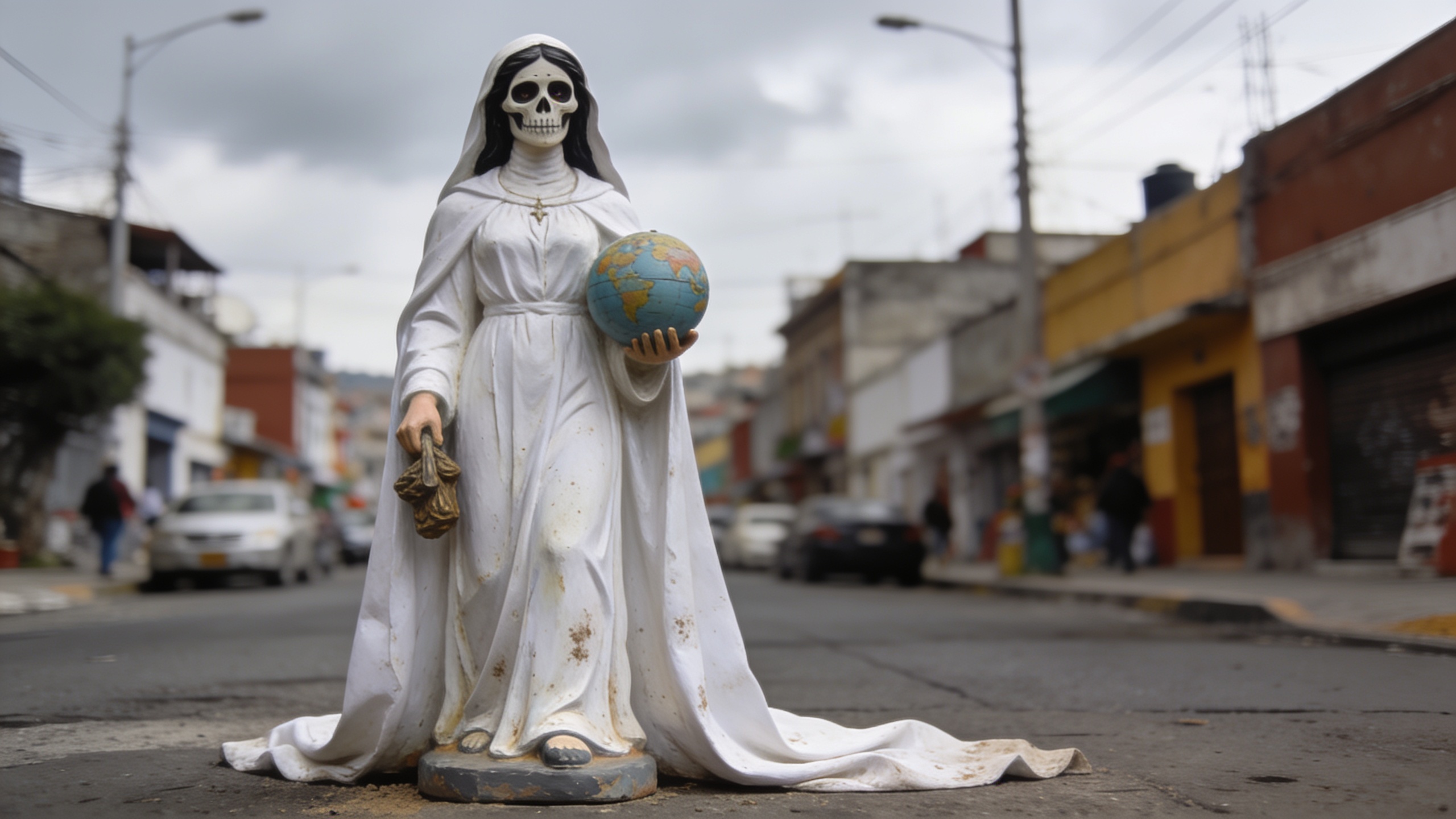
The robed skeleton holds a scythe in one hand, a globe in the other. In Mexico City's Tepito market, she stares from candles and statues, her hollow eyes fixed on anyone who stops. That figure is Santa Muerte, and her history isn't what most people think. She wasn't born in a cartel safe house or a Hollywood script. She came from a long blending of indigenous death goddesses, the European Grim Reaper, and African traditions brought across the ocean. Understanding where she really comes from changes how you see her. In 2001, a woman named Enriqueta Romero placed a life-size statue of Santa Muerte on her street in Tepito. That simple act turned a hidden devotion into a public one. Today, millions pray to her.
What this is
Santa Muerte is a female folk saint of death. Devotees see her as a protector. A healer. A guide to the afterlife. She wears a long robe, usually white, black, or red. She carries a scythe. It cuts the threads of life. She holds a globe. It shows her dominion over the world. An hourglass reminds you that time runs out. But she doesn't bring death. She walks with you through life. People pray to her for health. For love. For money. For safety and justice. She listens to the poor. The sick. The queer. The imprisoned. These are people the church often ignores. Her following has grown fast since 2000. It moved from Mexico into the United States and Europe. Then beyond.
What this isn't
Santa Muerte isn't a demon. She isn't a saint of the Catholic Church either. The Vatican condemns her devotion. But her followers, many of them Catholic, don't see any conflict between kneeling at Sunday Mass and lighting a candle for her later that night. She isn't just a narco-saint, though the press loves that story. Drug traffickers do pray to her. So do nurses. Taxi drivers. Single mothers. Cops. She isn't a tool for revenge. Her devotees ask for protection, not harm. You won't find curses or hexes in a typical altar. What you find is water. A candle. Fresh flowers. Faith. The candles are simple. The prayers are spoken low. It's intimate.
Pre-Hispanic Roots: Indigenous Death Deities
Long before the Spanish arrived, the peoples of Mesoamerica had their own death gods. The Aztecs worshipped Mictecacihuatl, the Lady of the Dead. She ruled the underworld Mictlan. She was a skeletal figure, often shown with a skirt of snakes and a jaw unhinged. The dead didn't vanish. They traveled. Their process through the nine levels of Mictlan took four years. Mictecacihuatl watched over their bones. The Maya had Ixtab, the goddess of suicide who guided souls to paradise. These were not evil beings. Death was part of a cycle, not an end. Life and death were two sides of the same cloth. During the harvest festival that became Día de los Muertos, the dead returned to eat and drink with the living, their spirits welcomed back like old friends. That old comfort never left us. Santa Muerte inherited these bones. Her indigenous ancestors gave her the right to stand at the crossroads and not flinch.
European Influences: The Grim Reaper and Catholic Imagery
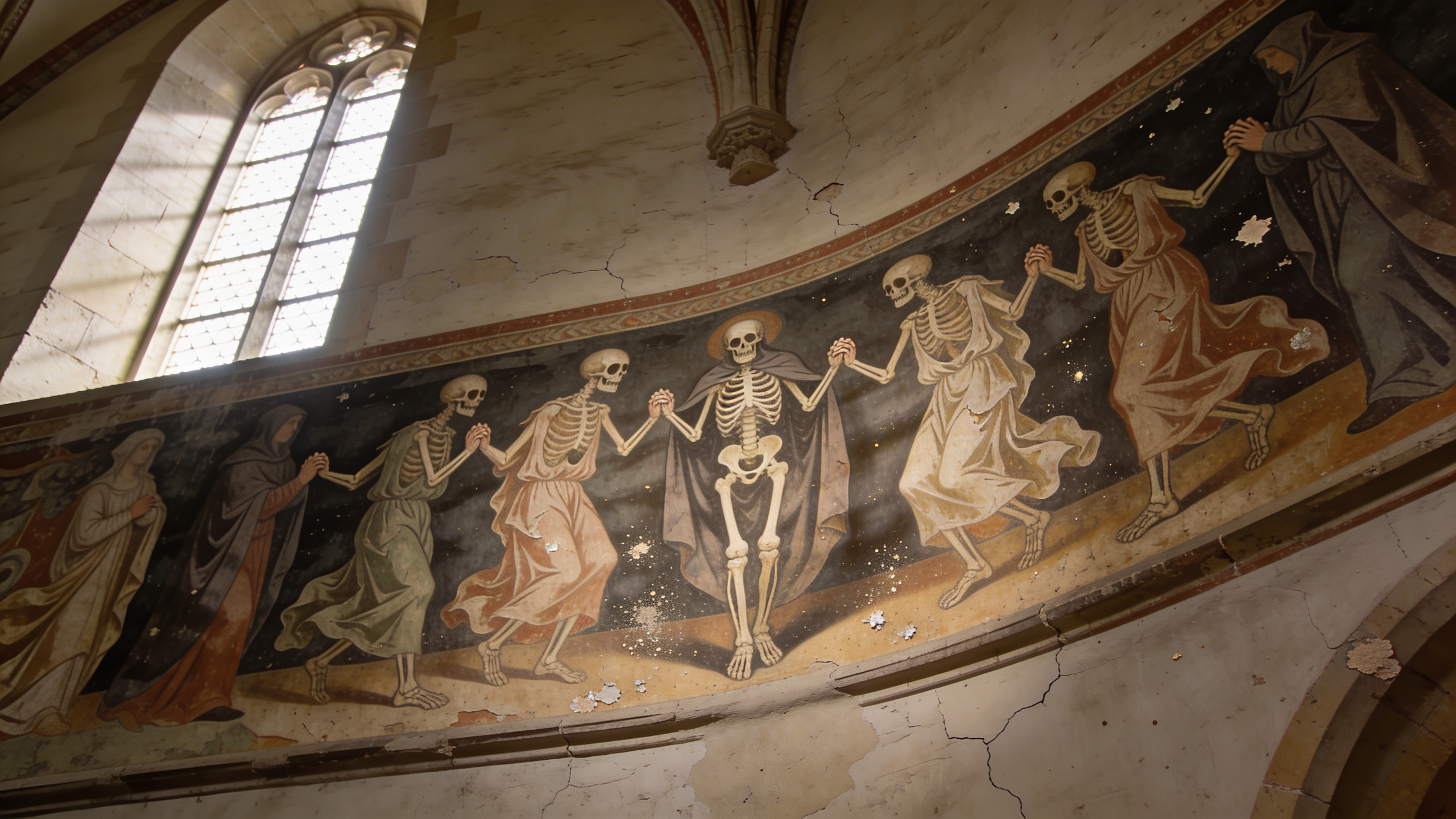
When the Spanish colonized Mexico, they brought their own death figure: the Grim Reaper. In Europe, the Black Death had turned death into a skeleton with a scythe. The danse macabre painted on church walls showed kings and peasants pulled into the grave. The Catholic Church used this image to teach about mortality. But they also had female saints. The Virgin Mary was everywhere. Some scholars argue that Santa Muerte is a dark mirror of the Virgin, a female figure of power who rules the dead instead of the living, standing at the threshold where prayers for mercy become prayers for passage. Indigenous people saw the Reaper and recognized their own death goddesses. They blended them. That's how Santa Muerte got her European robe. Her scythe. But she kept her indigenous bones. The colonizers tried to erase the old gods. Instead, the old gods put on new clothes. She kept walking.
African and Afro-Cuban Syncretism
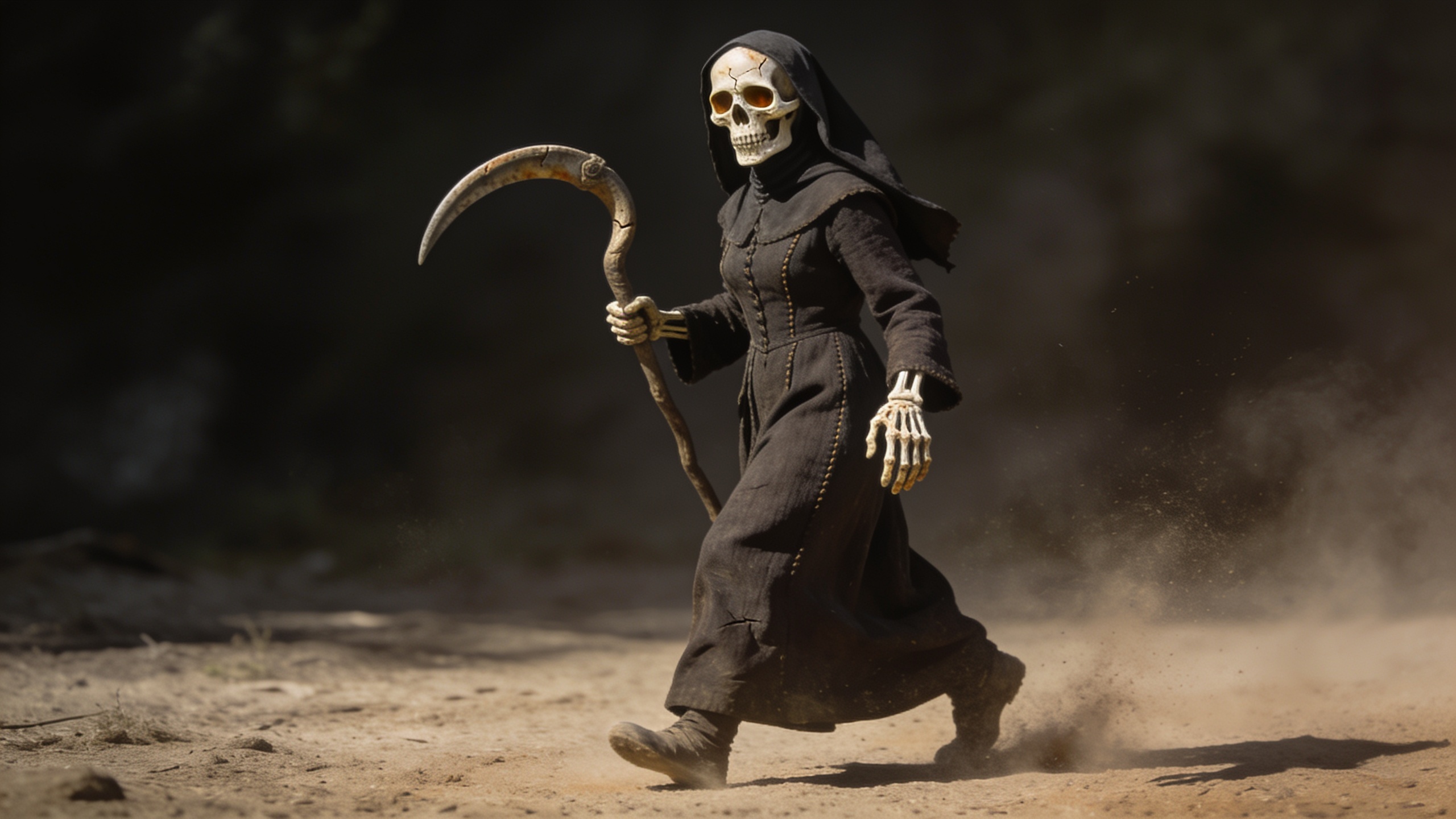
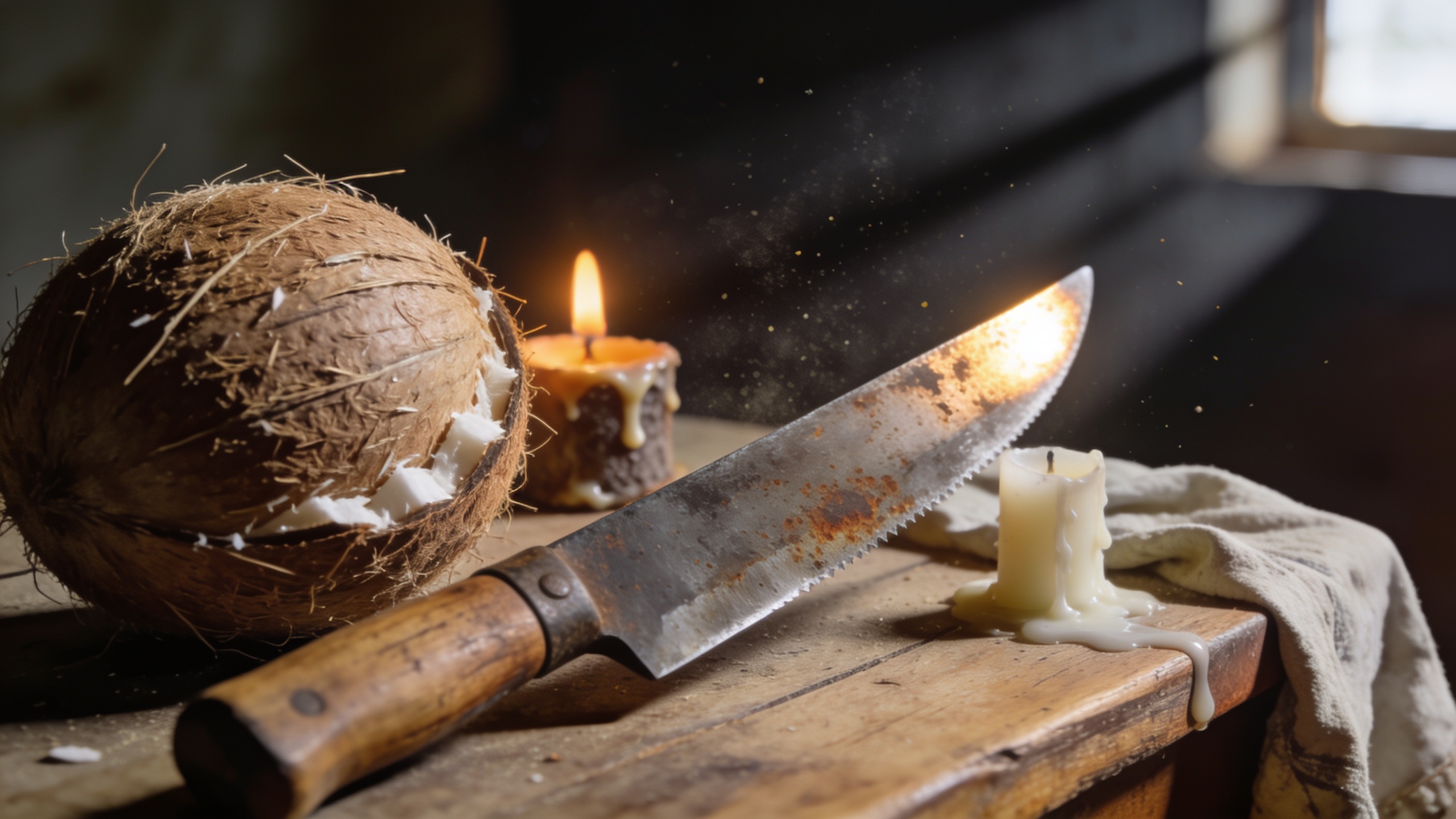
The slave trade brought African religions to the Americas. In Cuba, Santería and Palo Mayombe merged Catholic saints with African orishas and spirits. Santa Muerte found a home there too. In Santería, she's sometimes linked to Oyá, the orisha of the cemetery. Oyá stands at the gate. She carries a machete. She dances with the wind that tears down houses. In Palo, the dead are a living force. The nfumbe, the spirit of the dead, works in the cauldron. Santa Muerte became one of those powerful spirits. Practitioners brought these traditions to Mexico and the U.S. They added new rituals. New colors. New prayers. She could cross any border. National, religious, it didn't matter. Her altars in Veracruz might carry a coconut and a machete, while her altars in Mexico City hold roses and a shot of tequila, but the core doesn't change. She's still death.
Modern Expansion: From Folk Catholicism to Global Occultism
In the last 20 years, Santa Muerte has gone global. She appears in occult shops in New York and London. Then Berlin. Wiccans and neo-pagans have adopted her as a death goddess. Some practice a form of Santa Muerte witchcraft, with elaborate altars and spellwork. But the core remains the same: a personal relationship with death. You don't need a priest. You don't need a church. You just need a quiet space, a candle, an honest request. In Tepito, the public shrine grew. Enriqueta Romero opened her home. Thousands came every month. They left offerings. They whispered petitions. The Mexican government and the Catholic Church condemned it. The devotion only grew faster. During the drug war, when the bodies piled up and the government offered no answers, the desperate turned to her, and so did the hopeful, because she was the only one who'd listen without asking for a confession first. That's why she spreads so fast. A saint you can talk to without confession. A saint who doesn't turn away the tattooed, the divorced, the ex-con.
Limits
Santa Muerte devotion has limits. She doesn't replace a doctor. If you're sick, see a doctor first, and if you're in legal trouble, hire a lawyer, because Santa Muerte doesn't replace the living professionals who can actually stitch a wound or argue a case. Fire safety matters. Never leave a candle burning unattended. Don't lock yourself in a room with her altar and refuse to leave. That's not devotion. That's harm. Consent is required in any petition involving another person. Don't pray for someone else's suffering. That isn't her way. She walks with you, but you still have to walk. The candle won't pay your bills. The prayer won't cure your diabetes. She clears the path. You take the steps.
Questions people actually ask
### Is Santa Muerte a saint? She's a folk saint, not a canonized one, which means the Vatican doesn't recognize her, but millions of people treat her like a saint anyway. They pray. They build altars. They ask for miracles.
### Can Catholics pray to Santa Muerte? Many Catholics do, though the church forbids it. They see no contradiction. They pray to the Virgin for mercy and to Santa Muerte for the last mile, because one offers compassion and the other offers passage, and in a hard life you need both. It's that simple.
### Is Santa Muerte only for criminals? No. The media zooms in on cartels, but most devotees are ordinary people, the poor, the sick, the ones the world steps over. In Oaxaca, curanderos use her image for healing, and in Mexico City, shopkeepers tuck a small statue behind the counter.
### What do the colors mean? White is for cleansing and peace. Red is for love and passion. Black is for protection and justice. Gold is for money. Green is for health. You dress her in the color that matches your petition, white for cleansing, red for love, black for protection, because the robe tells her what you're asking for without a word. It's that direct.
### How do I start an altar? Find a clean space. Place a statue or image of Santa Muerte. Add 1 glass of water, 1 white candle, and fresh flowers, and that's enough to begin a relationship that will grow as you tend it. Keep the water clear. It's a mirror. Light the candle when you pray. Change the water often.
### Do I need to be baptized to pray to her? No. She doesn't ask for your baptismal certificate or a letter from a priest; she asks for your honesty, your presence, and maybe a candle you've lit yourself. Anyone can sit at her table.
Light a white candle tonight. Set 1 glass of water beside it. Say her name once. Listen. That's the first step.